

Market Summary
Global Equity
Investors acting more cautious despite strong fundamentals
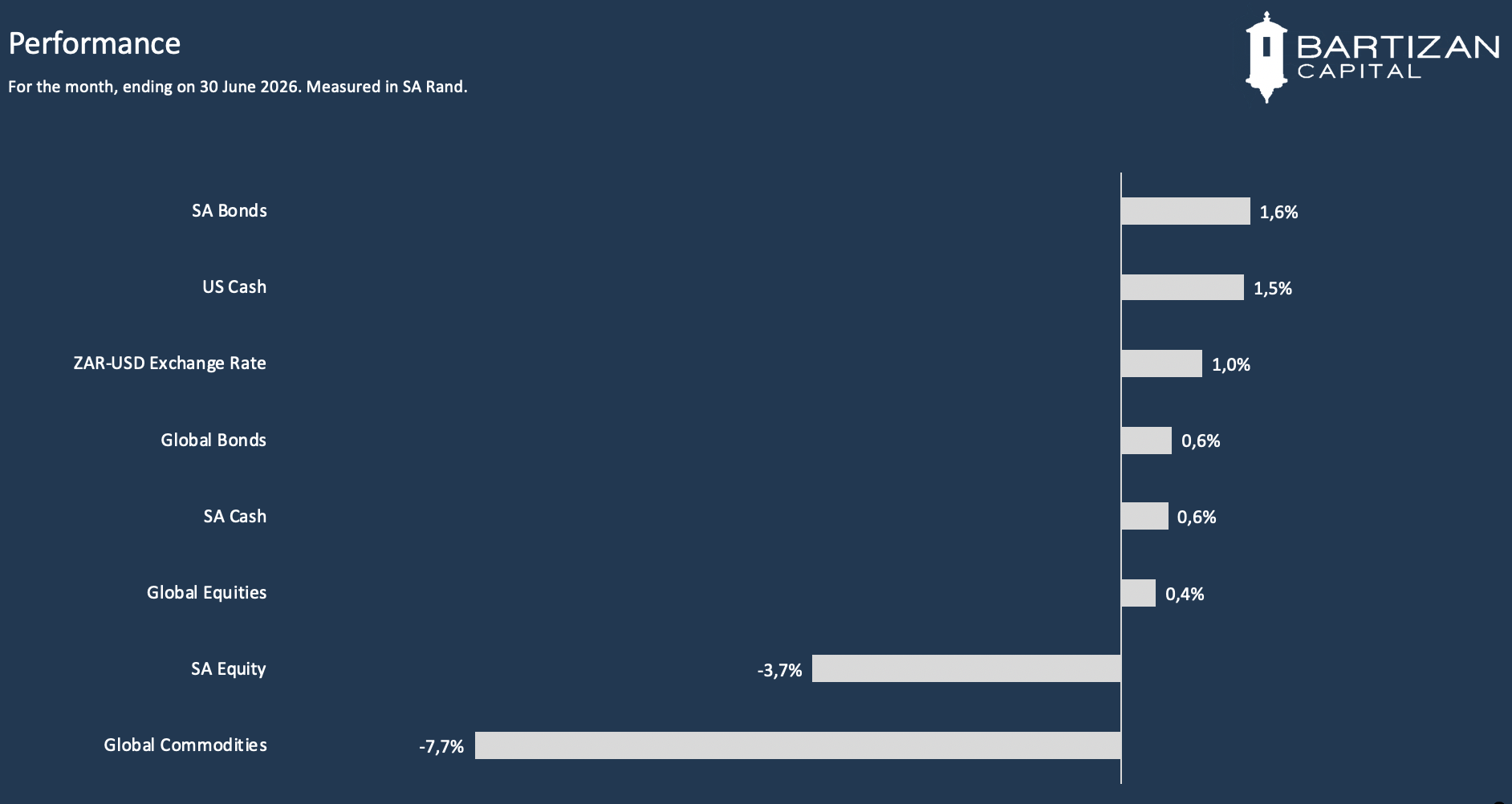
Global equity markets softened in June, with the MSCI All Country World Index declining 0.8% in USD. The pullback followed a strong recovery in previous months and reflected profit-taking, shifting interest rate expectations and geopolitical uncertainty, rather than a meaningful deterioration in the global economic outlook.
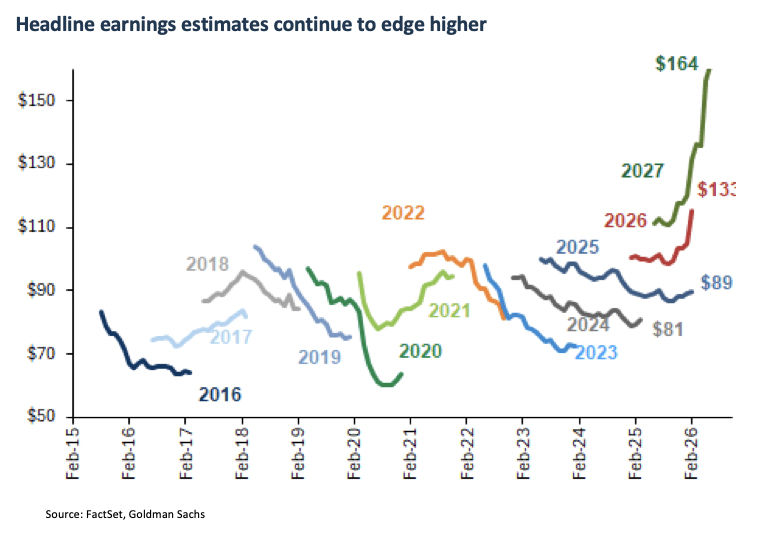
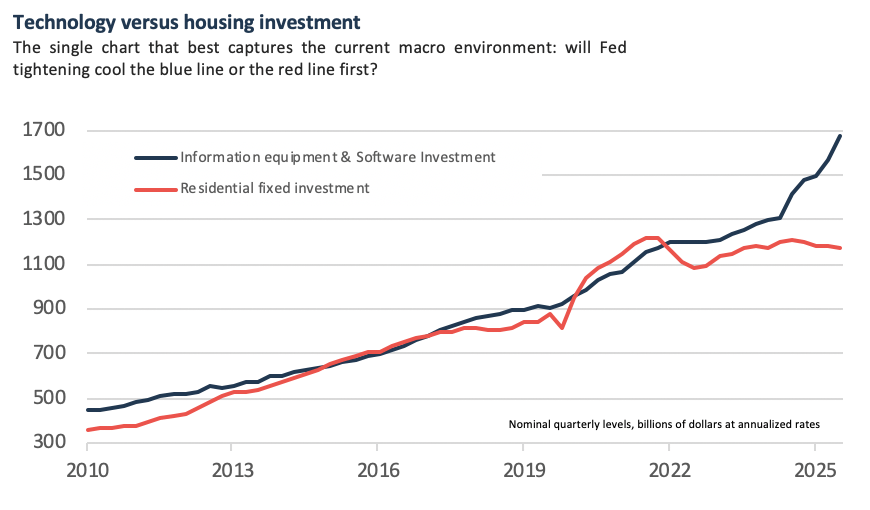
Investors reassessed the timing of future interest rate cuts as inflation remained mixed across developed markets. Higher bond yields weighed on equity valuations at times, particularly in growth sectors such as technology. AI-related companies remained supported by strong earnings expectations, but recent gains were partly offset as investors reduced risk exposure.
Geopolitical tensions also contributed to volatility and encouraged some rotation into more defensive sectors, including consumer staples and healthcare. Developed markets generally outperformed emerging markets, although performance varied across regions.
Despite the decline, fundamentals remained broadly supportive, underpinned by resilient earnings, ongoing AI investment and positive, though moderating, global growth. June therefore looked more like a normal consolidation after strong gains than the start of a broader risk-off environment.
Global Fixed Income
Persistent inflation concerns pushed government bond yields higher
Global fixed income markets delivered mixed performance in June as investors weighed inflation concerns, shifting central bank expectations and geopolitical uncertainty. Government bond yields generally moved higher, especially at longer maturities, as resilient economic data, firm labour markets and earlier energy price volatility raised concerns that inflation could stay above target for longer. As yields rose, government bond prices came under pressure.
Bond investors continued to reduce expectations for near-term rate cuts, with some markets even beginning to price in the possibility of further rate hikes. This placed upward pressure on sovereign bond yields, particularly US Treasuries.
Corporate credit performed better. Investment-grade and high-yield spreads remained tight, supported by strong company balance sheets, healthy earnings and continued demand for income.
June showed the importance of balancing interest-rate risk with income opportunities. Rising government bond yields hurt short-term performance, but higher starting yields improve the longer-term return outlook for fixed income investors. High-quality corporate credit remains supported by resilient fundamentals and attractive income.
Commodities
Geopolitical risk and macroeconomic outlook drives commodity markets in June
Commodity markets were mixed in June as investors weighed geopolitical risks, changing expectations for global growth and monetary policy, and shifting supply dynamics. Energy markets remained volatile, while precious metals saw sharp price swings as safe-haven demand fluctuated with developments in the Middle East and interest rate expectations.
Oil prices rose sharply early in the month as tensions in the Middle East raised concerns over possible supply disruptions through the Strait of Hormuz, a key route for global oil exports. However, prices later gave back much of those gains as tensions eased and the risk of a prolonged disruption faded. Softer demand concerns, particularly from China, also weighed on prices.
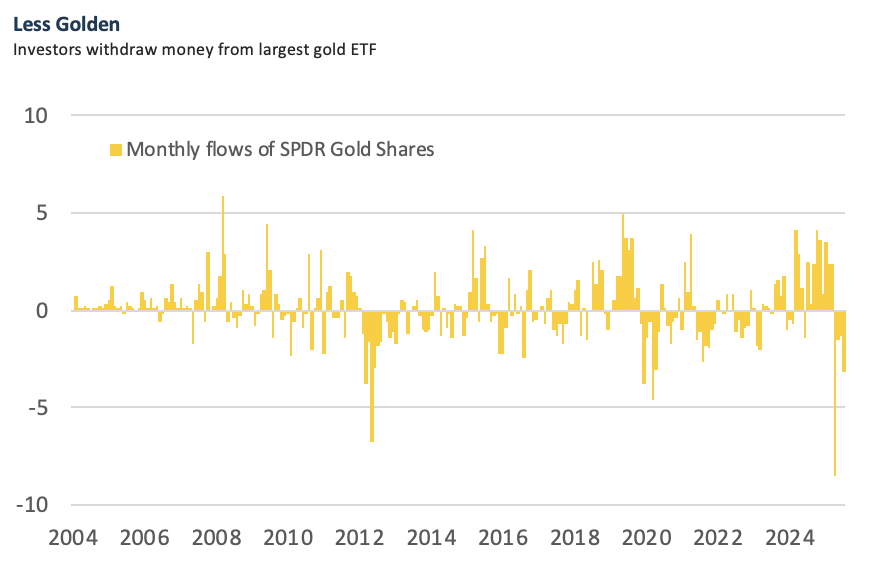
Gold was also volatile. It initially benefited from geopolitical uncertainty but lost momentum as attention shifted back to monetary policy. Expectations that the US Federal Reserve could keep interest rates higher for longer supported the US dollar and bond yields, reducing gold’s appeal. Even so, gold remained a useful hedge against geopolitical risk, supported by central bank buying and long-term diversification demand.
Overall, June showed how sensitive commodities remain to geopolitical events, interest rate expectations and global growth concerns. Oil reflected the balance between supply risks and weaker demand, while gold was driven by safe-haven flows, rates and dollar strength.
Currencies
US Dollar continues to benefit from its safe-haven status
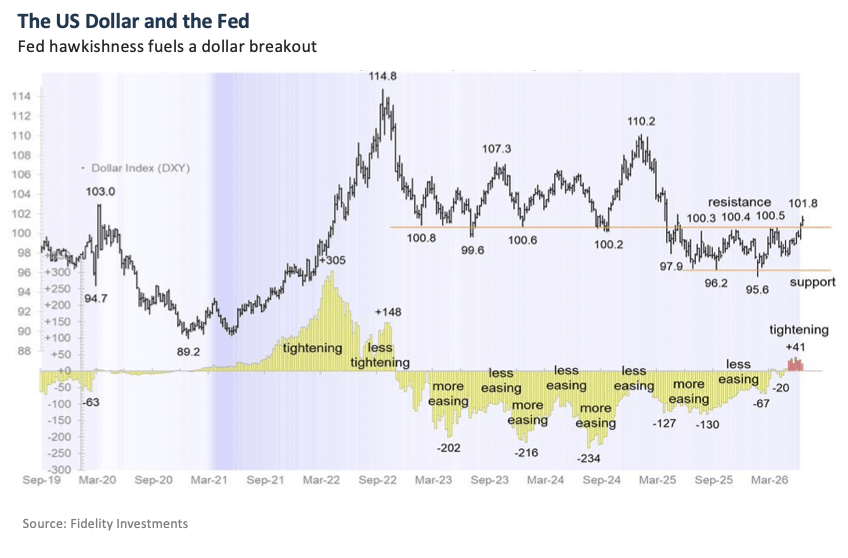
Currency markets in June were driven by shifting interest rate expectations, relative growth prospects and geopolitical developments. The US dollar remained broadly resilient against most major currencies, supported by elevated Treasury yields, persistent inflation concerns and expectations that the Federal Reserve would keep policy restrictive for longer than many other central banks. Although the dollar weakened slightly towards month-end after softer US economic data, it remained one of the stronger developed market currencies.
The euro stayed under pressure as weaker Eurozone growth and concerns about the region’s outlook offset support from tighter European Central Bank policy. The Japanese yen remained weak as the Bank of Japan kept policy accommodative while US rates stayed high, renewing speculation about possible intervention.
Sterling traded in a narrow range, with above-target UK inflation balanced against economic uncertainty and expectations that the Bank of England would move cautiously. The US dollar continued to benefit from its safe-haven appeal and attractive interest rate advantage. Softer US data late in the month eased some pressure, but the dollar remained well supported.
South Africa
Falling commodity prices pulls resource sector lower, but lower oil prices support consumer stocks and bonds
South African equities experienced another down month, declining 3.7% for June. The top 10 resource companies, which represents around a third of the SA equity market, declined by 16%, as gold and platinum prices fell by more than 10% over the month.
Industrial shares, in general, gained almost 2% for the month. Retailers like Mr Price (+15%) and Truworths (+13%) benefitted from falling oil prices, as investors anticipates that lower petrol prices will alleviate some of the pressure facing local consumers.
Financials also delivered positive returns, with good performance from property counters. Investec was one of the few financial counters that recorded a negative return, declining 7% in June. At the start of the month, Investec was trading at levels very close to its all-time high, and the decline during the month was most likely investors taking some profits.
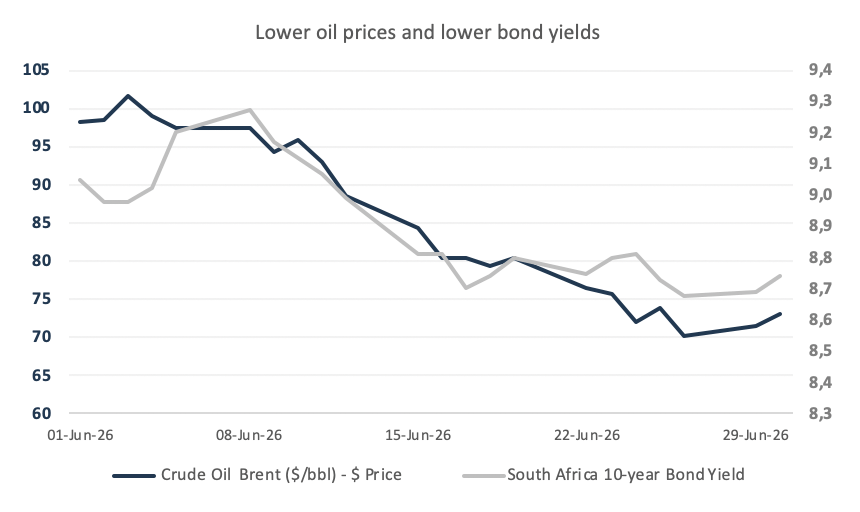
SA 10-year Bond yields followed the movement of oil prices during June, and as the oil price fell during the last three weeks of the month, so did SA 10-year bond yields. Investors anticipate that lower oil prices will lead to lower inflation, and in turn create room for the South African Reserve Bank to cut rates.
Disclaimer
The information and opinions contained in this document are recorded and expressed in good faith and in reliance on sources believed to be credible. No representation, warranty, undertaking or guarantee of whatever nature is given on the accuracy and/or completeness of such information or the correctness of such opinions. Bartizan Capital will have no liability of whatever nature and however arising in respect of any claim. damages. loss or expenses suffered directly or indirectly by the investor or the investor’s financial advisor acting on the information contained in this document. Furthermore, due to the fact that Bartizan Capital does not act as the investor’s financial advisor, they have not conducted a financial needs analysis and will rely on the needs analysis conducted by the investor’s financial advisor. Analytics recommend that investors and financial advisors take particular care to consider whether any information contained in this document is appropriate given the investor’s objectives. financial situation and particular needs in view of the fact that there may be limitations on the appropriateness of any advice provided. No guarantee of investment performance or capital protection should be inferred from any of the information contained in this document.
Bartizan Capital (Pty) Ltd is an authorised Financial Service Provider. FSP Number. 48450.